 TheDubaiVacancy Latest Jobs in Dubai 2025, Apply For Private & Govt Jobs
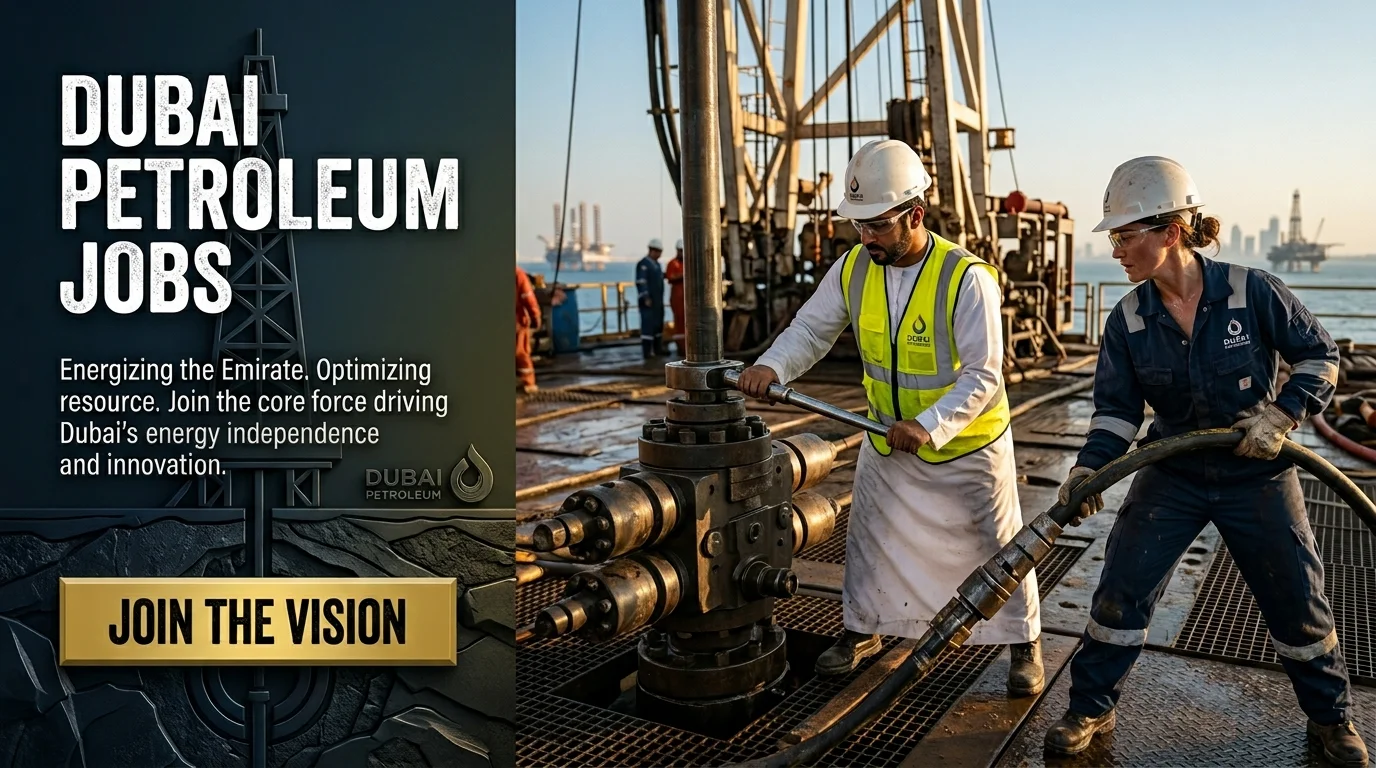
Dubai Petroleum Establishment (DPE) manages the emirate’s legacy marine energy assets. Professionals targeting Dubai Petroleum jobs are signing up for heavy offshore extraction and deep-water pipeline maintenance. Operations across core sites like Fateh, Southwest Fateh, and Falah require intense mechanical intervention. The daily objective for these crews is squeezing maximum hydrocarbons out of mature reservoirs using aggressive Enhanced Oil Recovery (EOR) and artificial lift techniques.
Working out on the water is a grueling physical commitment. Drill crews and subsea engineers live on isolated metal platforms in the middle of the Arabian Gulf, usually operating on a rigid 28/28 or 14/14 rotation—working 12-hour daily hitches for a full month before flying home for an equal period of leave. Because helicopter transport is the only way in, HR strictly enforces rigorous underwater survival testing and offshore medical clearances before anyone is allowed near the heliport.
Back onshore, the focus pivots entirely to supply chain logistics and reservoir modeling. The central base orchestrates massive logistical movements, dispatching heavy drilling mud, replacement bits, and daily catering supplies out via marine supply vessels. Inside the tech hubs, geoscientists and reservoir engineers crunch massive 3D seismic models to pinpoint trapped crude within complex rock formations.
Marine energy extraction is inherently dangerous. Crews deal with highly pressurized sour gas, creating constant exposure risks to deadly Hydrogen Sulfide (H2S). The safety culture here is absolute. Failing to carry a personal gas monitor or violating a permit-to-work protocol does not result in a written warning—it forces the rig manager to put you on the next flight back to shore permanently.
Our Honest Take: DPE vs ADNOC?
Our Analysis: Abu Dhabi’s ADNOC is exponentially larger, offering a wider variety of onshore refinery and petrochemical roles. However, DPE offers a highly focused, pure offshore experience. The rotational schedules at DPE are highly coveted by expat workers who want to earn a massive tax-free income during their 28-day hitch, and then fly back to their home countries for a full month of uninterrupted leave.
Expert Pro Tip: “The BOSIET Bottleneck.” Offshore recruiters will immediately bin your CV if you do not possess valid offshore survival certifications. Highlight your OPITO-approved BOSIET (Basic Offshore Safety Induction and Emergency Training) and active OGUK Medical certificate in bold at the very top of your resume. Showing you are fully ticketed and ready to fly offshore tomorrow makes you incredibly hirable.
Job Overview: Salary & Allowances (2026 Dubai Estimates)
Note: Salaries are paid in UAE Dirhams (AED) and are 100% tax-free. Offshore oil and gas benefits are notoriously high due to hazard pay, including comprehensive global health insurance, massive rotational flight allowances, and fully covered living expenses while on the rig.
| Qualification Level | Est. Monthly Salary (AED) | Position Type |
| MSc Eng / 12+ Yrs Exp. | AED 40,000 – AED 65,000 | Offshore Installation Mgr |
| BSc Eng / 8+ Yrs Exp. | AED 25,000 – AED 35,000 | Senior Subsea Engineer |
| Diploma / 5+ Yrs Exp. | AED 12,000 – AED 18,000 | Rig Mechanic / Electrician |
| High School / 3+ Yrs Exp. | AED 7,000 – AED 10,000 | Roughneck / Deckhand |
Which Divisions Are Hiring? (Sector Breakdown)
Offshore energy extraction is divided into highly specialized, compartmentalized units. You must align your technical resume with the exact operational division that matches your industrial background:
1. Offshore Drilling & Well Intervention
- Target Audience: Drillers, Toolpushers, and Well Testing Supervisors.
- The Daily Grind: Punching through the seabed. You manage the physical drill string, monitor mud pressures, and execute complex well completions. This is heavy, dangerous mechanical work requiring constant vigilance against deadly well kickbacks and blowouts.
2. Subsea Engineering & Pipeline Integrity
- Target Audience: ROV Pilots, Corrosion Engineers, and Pipeline Technicians.
- The Daily Grind: Maintaining the underwater arteries. You operate Remote Operated Vehicles (ROVs) to inspect deep-water wellheads and repair structural damage on subsea pipelines. Corrosion engineers constantly monitor the integrity of aging metal infrastructure against the brutal saltwater environment.
3. Onshore Geoscience & Reservoir Management
- Target Audience: Petrophysicists, Geologists, and Reservoir Engineers.
- The Daily Grind: Mapping the invisible. You build complex 3D computer models of the rock formations located thousands of feet below the ocean floor. Your job is to calculate exactly where the drilling team needs to steer the bit to maximize crude oil recovery without hitting dry zones.
The Reality of Offshore Careers in the UAE: OPITO & Rig Rotations
Stepping onto a marine platform is not for the faint-hearted. Professionals chasing heavy oil and gas jobs in Dubai must clear severe physical and regulatory hurdles before HR will ever assign them a helicopter seat:
- OPITO Certification & The HUET Nightmare
The marine extraction industry is strictly gated. You cannot legally fly out to a rig without completing an OPITO-approved survival course. This includes the notorious HUET (Helicopter Underwater Escape Training), where trainees are strapped into a simulated helicopter cabin, violently submerged, flipped upside down in a pool, and forced to kick out a window to survive. Lacking this specific, in-date certification means your CV goes straight to the trash.
- The Grueling 28-Day Hitch
The physical and mental toll of the Dubai energy sector is massive. Offshore crews operate on a brutal 28-day rotational hitch. This means living on a floating steel structure for four straight weeks, pulling 12-hour shifts daily with zero weekends off. You share cramped sleeping quarters, eat in a communal galley, and remain completely isolated from the mainland. The sole trade-off for this grueling schedule is the matching 28 days of fully paid, uninterrupted leave that follows.
- Lethal H2S Gas Hazards
Drilling into deep marine reservoirs frequently releases Hydrogen Sulfide (H2S)—a highly lethal, invisible gas associated with sour crude. Rig workers wear personal gas monitors clipped to their coveralls at all times and train constantly with pressurized breathing apparatuses. A single failure to respect an H2S protocol or properly maintain your escape mask will force the Offshore Installation Manager (OIM) to ban you from the platform for life.
Featured “Hot” Vacancy: Senior Subsea Pipeline Engineer
The offshore integrity division is actively recruiting a specialized engineer to manage the inspection and maintenance of aging subsea pipelines connecting the Fateh field to onshore processing facilities.
- Estimated Salary: AED 25,000 – AED 35,000 per month.
- Location: Offshore Rigs / Dubai HQ (Rotational).
Requirements:
- Bachelor’s Degree in Mechanical, Ocean, or Subsea Engineering.
- Minimum of 8 years of direct experience managing offshore pipeline integrity and ROV inspection campaigns.
- Deep knowledge of cathodic protection systems and subsea corrosion mitigation.
- Valid OPITO BOSIET, H2S Awareness, and OGUK Medical certificates are strictly required.
How to Apply for Dubai Petroleum Jobs (The Real Way)
Getting hired for a marine platform isn’t about submitting a generic resume to a job board. The offshore crewing process is fast, brutal, and highly specific. You need to leverage the correct industrial pipelines:
Step 1: The Operator’s Direct Portal
For onshore geosciences, supply chain, and senior corporate engineering, you must route your file directly through the Official Dubai Petroleum Portal. The software parsing these uploads isn’t looking for soft skills. It scans explicitly for heavy hardware experience. If your CV doesn’t feature exact keywords like “Top Drive Systems,” “Slickline Operations,” or “IWCF Level 4 Well Control,” your profile gets buried automatically.
Step 2: The Expat Agency Backdoor
To rapidly fill rotational rig crews, the operator relies heavily on elite energy manpower agencies. You need to get your file into the databases of international contractors like NES Fircroft, Brunel, and Airswift. These headhunters hold the actual crewing contracts for the Gulf. Sending them an updated CV displaying an active OGUK medical and valid OPITO tickets is the fastest route onto the chopper manifest.
Step 3: Bypassing HR for Technical Approvals
Corporate HR screeners often lack the deep mechanical knowledge to properly evaluate an advanced subsea engineer. Smart candidates find the actual “Offshore Installation Managers” (OIM) or “Drilling Superintendents” operating the DPE fields on LinkedIn. Firing over a brief, no-nonsense message detailing your exact rig count, hardware proficiencies, and immediate availability often bypasses the corporate red tape entirely.
Advertisements
